
Identity area
Reference code
Title
Date(s)
Level of description
Subseries
Extent and medium
Context area
Name of creator
Administrative history
Established by Henry Hu and Chung Chi-yung in 1971 to provide higher education, the first campus was in Happy Valley. In July 1971, it started to provide higher education section in daytime and night time (大專部日夜組), and Form 6 to Form 7 education (大學預科班).
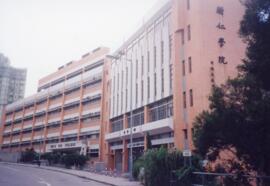
In 1972, Shue Yan Secondary College (樹仁書院中學部/樹仁英文書院) opened in Gap Road, Wan Chai. It was operated and funded as a private secondary school, providing From 1 to From 6 education. At the same time, the campus was used by Shue Yan College (樹仁書院大專部) at night time (夜組) to provide tertiary education while the Happy Valley campus used for day-time (日組) tertiary education courses.
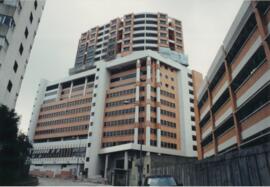
In 1976, Shue Yan College was (樹仁書院) registered as a Post-Secondary College under the 1964 Post-Secondary Colleges Ordinance. It was renamed "Shue Yan College (樹仁學院)" in the same year as the institute was entitled to award post-secondary diplomas. The higher education sector moved to Monmouth Path, Wan Chai Campus in 1977, and moved to Braemar Hill Campus in 1986, later became Hong Kong's first private university.
The secondary education sector remained the name 'Shue Yan Secondary College (樹仁書院中學部)' and stayed in Wan Chai Campus since 1977, and closed in 1993.
Repository
Archival history
Transferred from the two presidents' offices to the Library in 2020, then from the Library to the University Archives in 2022.